Stop Rodents Before Winter Hits Your Coastal Attic
Attics in Orange County coastal cities are busy places for rats and mice as the days get shorter. As fall routines kick in, rodents look for quiet, sheltered spots to nest, raise young, and stay out of the changing outdoor conditions. Your attic in San Clemente, Dana Point, Laguna Niguel, or any nearby beach community can turn into a warm, hidden hotel for them almost overnight.
Coastal humidity, salty air, and worn-out vent screens create a perfect setup for an infestation. Salt in the air eats away at metal, weak spots open up, and rodents only need a small gap to squeeze into your attic. When that happens, they put your insulation, wiring, and indoor air at risk.
In this guide, we walk through how coastal attics get damaged, what to look for during a DIY check, when rat removal in the attic calls for a professional, and simple steps that help keep rodents out longer term.
Why Coastal Attics Are Rodent Hotspots
Rats and mice love attics for the same reasons we like a quiet spare room. It is dry, out of sight, and close to food and water inside the home. In fall, attic temperatures often stay more steady than outdoors, which makes these spaces even more attractive.
Along the Orange County coast, salty air slowly breaks down building materials. Over time, this can lead to:
- Rusted metal vent covers and screens
- Warped or cracked wood around roof edges
- Dried-out caulking and loose seals around pipes or wires
- Gaps around older roof tiles or flashing
All of these create easy entry points for rodents. Homes near the ocean often have complex rooflines, second or third stories, and tile roofing. That means more hidden corners and vents for pests to use and more places where damage can go unnoticed.
Older beach cottages and HOA townhomes have added challenges. Shared walls or roof spaces can let rodents move from unit to unit. So even if you keep your home tidy, activity next door can still end up in your attic.
Coastal Humidity, Salt Air, and Attic Damage Risks
Humidity mixed with salt air is hard on the top of your home. Metal parts in and around the attic do not stay new for long along the coast. Once corrosion starts on screens, nails, and flashing, it usually spreads.
You may notice:
- Orange or brown rust streaks below vents
- Flaking or crumbling metal mesh
- Loose or missing fasteners around vent frames
Moisture in the attic can flatten or clump insulation, making it easy for rats to tunnel and nest. Soft, damp wood is also easier for them to chew. Then they add their own mess. Rat urine and droppings increase odors and moisture problems, and over time that can stain wood and insulation.
There are also serious secondary hazards:
- Chewed electrical wiring that raises fire risk
- Contaminated HVAC ducts that move smells and allergens through the house
- Higher energy bills when damaged insulation no longer holds air properly
That is why catching the first signs of rodent damage, especially near coastal vents and roof edges, matters early on.
DIY Attic Inspection Checklist for Coastal Homes
If you can safely access your attic, a simple visual check can tell you a lot. Plan to go up during a cool, bright morning so you can see clearly and stay comfortable.
For safety, use:
- A dust mask or respirator
- Gloves
- Long sleeves and pants
- A flashlight or headlamp
Always step only on the joists or secure plywood, not on the drywall ceiling. Move slowly and do not disturb insulation more than needed.
Key rodent signs linked to rat removal in the attic include:
- Fresh droppings, usually dark and pellet-shaped
- Greasy rub marks along beams or near openings
- Gnaw marks on wood, plastic, or wiring
- Shredded insulation or chewed cardboard and fabric
- Scratching, rustling, or tapping sounds at night
- Strong ammonia-like odors from urine
Coastal homes should also get an extra moisture and salt check.
- Corrosion or holes in vent screens, especially on ocean-facing sides
- Gaps at the roofline where light shines through
- Dark stains that suggest leaks or chronic damp spots
- Any sign of mold or mildew that might point to long-term moisture
If you smell strong odors, see heavy droppings, or spot damaged wiring, it is safer to stop and let a professional step in.
Checking and Upgrading Your Vent Screens and Seals
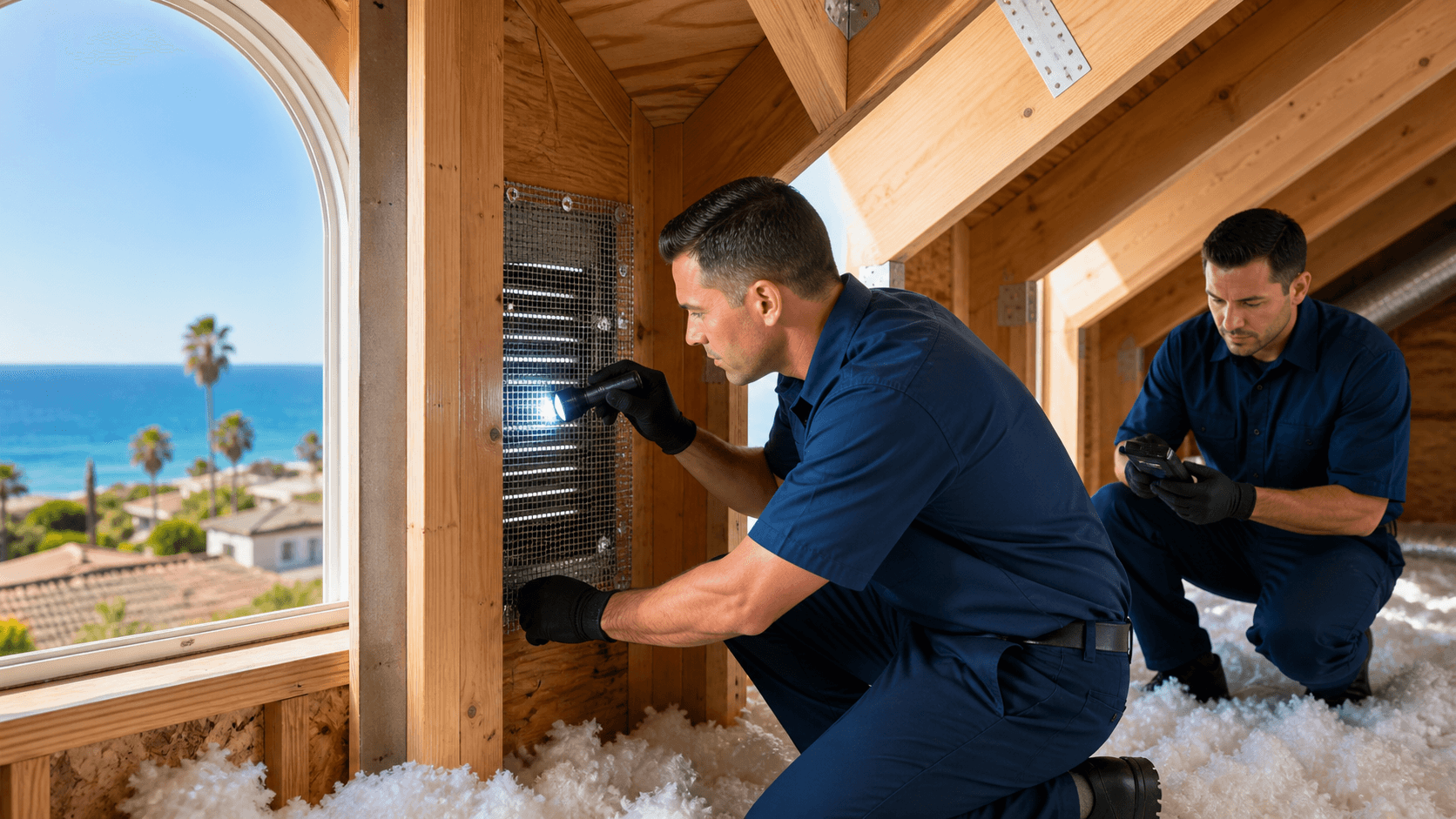
Vents are some of the most common rodent entry points in coastal attics. They sit right in the salty airflow, so they wear down faster than many people expect. It is worth giving them close attention, from both inside the attic and outside the home if you can safely see them.
Check all accessible:
- Soffit vents under the roof overhang
- Gable vents on the side walls near attic level
- Roof vents and attic fans
Look for rust, bent frames, torn or pulled-back mesh, and any opening larger than a dime. Small rodents can squeeze through surprisingly tiny gaps.
When a screen is clearly damaged, the usual fix is to remove the old mesh and install new hardware cloth, often with 1/4-inch openings, using corrosion-resistant fasteners. Edges should be sealed tight with an exterior-grade sealant so rodents cannot push or chew their way in.
On steep roofs, multi-story homes, or where there is heavy damage, this kind of work can be risky. That is when a licensed pest control pro with safe ladder and roof practices is the better choice.
Smart DIY Rodent Prevention Steps That Actually Work
Simple prevention around your home makes rat removal in the attic less likely in the first place. Since rodents follow food, shelter, and easy access, small changes go a long way.
Some helpful exclusion steps many homeowners consider:
- Sealing tiny gaps with a combination of steel wool and a strong sealant
- Adding door sweeps to garage and side doors
- Screening around utility lines, pipes, and vents on exterior walls
- Paying extra attention to the ocean-facing side of the house
Inside and around the garage, it helps to:
- Keep pet food in sealed containers, not open bags
- Use trash cans with tight-fitting lids
- Trim back plants and vines that touch the house
- Store items on racks or shelves, not directly on the floor
If you decide to set traps, choose covered or tamper-resistant options placed out of reach of kids and pets. Loose poison in the attic is not a good idea. It can lead to dead animals in hidden spaces and lingering odors. For odor control, dead animal removal, and full sanitation, it is usually safer to work with a pro.
When to Call a Coastal Rodent Control Expert
Sometimes even careful DIY steps are not enough. Coastal conditions and connected roof spaces can make rodent problems stubborn and hard to pin down.
Red flags that it is time for expert help include:
- Ongoing scratching or running sounds after you have tried basic trapping
- Strong, lingering odors that do not fade
- Heavy or spreading droppings in different attic areas
- Visible rats or mice entering at the roofline or vents
- Activity in older homes or multi-unit buildings where rodents may move between spaces
A local company that understands Orange County coastal homes can combine rat removal in the attic with a close look at moisture issues, salt-air damage, and long-term exclusion. At Recon Pest Control, we work with kid- and pet-safe methods and focus on sealing entry points so you are not stuck in a constant cycle of trapping.
When attic spaces are protected before the rainy season and holiday rush, your home stays quieter, cleaner, and safer for the long term.
Protect Your Home With Fast, Professional Rodent Solutions
If you are hearing scratching or spotting droppings overhead, our team is ready to provide targeted rat removal in the attic so you can feel secure in your home again. At Recon Pest Control, we inspect, remove, and help prevent future rodent activity using safe, proven methods. Reach out today and let us assess your situation, explain your options, and schedule service that fits your timeline. If you are ready to take the next step, contact us to get started.