Stop Letting Coastal Pests Ruin Your Laguna Beach Home
Laguna Beach living sounds perfect, right? Ocean views, salty breezes, open windows, and sandy feet coming in from the shore. But that same coastal setting that feels so relaxing also gives pests an edge all year long. Ants, spiders, termites, and rodents do very well in this kind of mild, moist climate.
Salt air, steady humidity, and older or custom homes create weak spots that pests love. Tiny gaps in wood, worn stucco, and loose weatherstripping all turn into easy doorways. Most of the time, the worst pest problems do not come from bad luck. They come from a few repeat mistakes that many homeowners make without even knowing it. When we fix those habits, pest control in Laguna Beach gets a lot easier and a lot safer for your family.
Coastal Moisture and Hidden Entry Points
Laguna Beach mornings often start damp, with mist or fog hanging in the air. That moisture sinks into wood trim, decks, fences, and window frames. Over time, the salty air speeds up wood rot and causes caulking to crack, and seals around doors and windows can warp just enough for pests to squeeze in.
Common homeowner mistakes include:
- Ignoring small gaps around water lines, gas lines, and cable entries
- Leaving crawl space vents wide open or uncovered
- Skipping routine checks of decks, fascia boards, and under-sink plumbing
When those areas stay out of sight, they stay out of mind. Ants and spiders only need a hairline crack to start a trail into your kitchen. Rodents look for loose vents or damaged screens to get into crawl spaces and attics.
A simple home perimeter check every few months can catch a lot of trouble early. Walk your property with a flashlight and look closely around:
- Door frames and sliding glass tracks
- Window corners and sills
- Stucco cracks, especially near the foundation
- Areas around outdoor faucets and AC lines
If you spot a small gap around a window or door, weatherstripping or silicone caulk can often tighten it up. When you see soft, crumbling wood, bubbling paint, or dark moisture stains, it is time to get a professional opinion. Those signs can mean you have pests, wood decay, or both starting to spread.
The Problem with Store-Bought Sprays
A line of ants shows up on the counter, and the first move for many people is a quick grab for a can of spray. It feels satisfying to spray and see bugs fall. The problem is what you do not see. Most over-the-counter sprays only hit the insects that are out in the open. Nests stay hidden in walls, soil, or ceiling spaces.
Coastal pests like Argentine ants are especially tough. These ants often split their colonies. When surface sprays hit a trail, they can scatter and form new nests in more places. Roaches and spiders can also avoid treated surfaces or move deeper into wall voids and attics. In condos and townhomes, that movement can send pests into neighboring units.
Other issues with heavy spray use include:
- Misreading labels or mixing products the wrong way
- Spraying in areas where kids or pets spend time
- Foggers that leave residue but do not reach hidden nesting sites
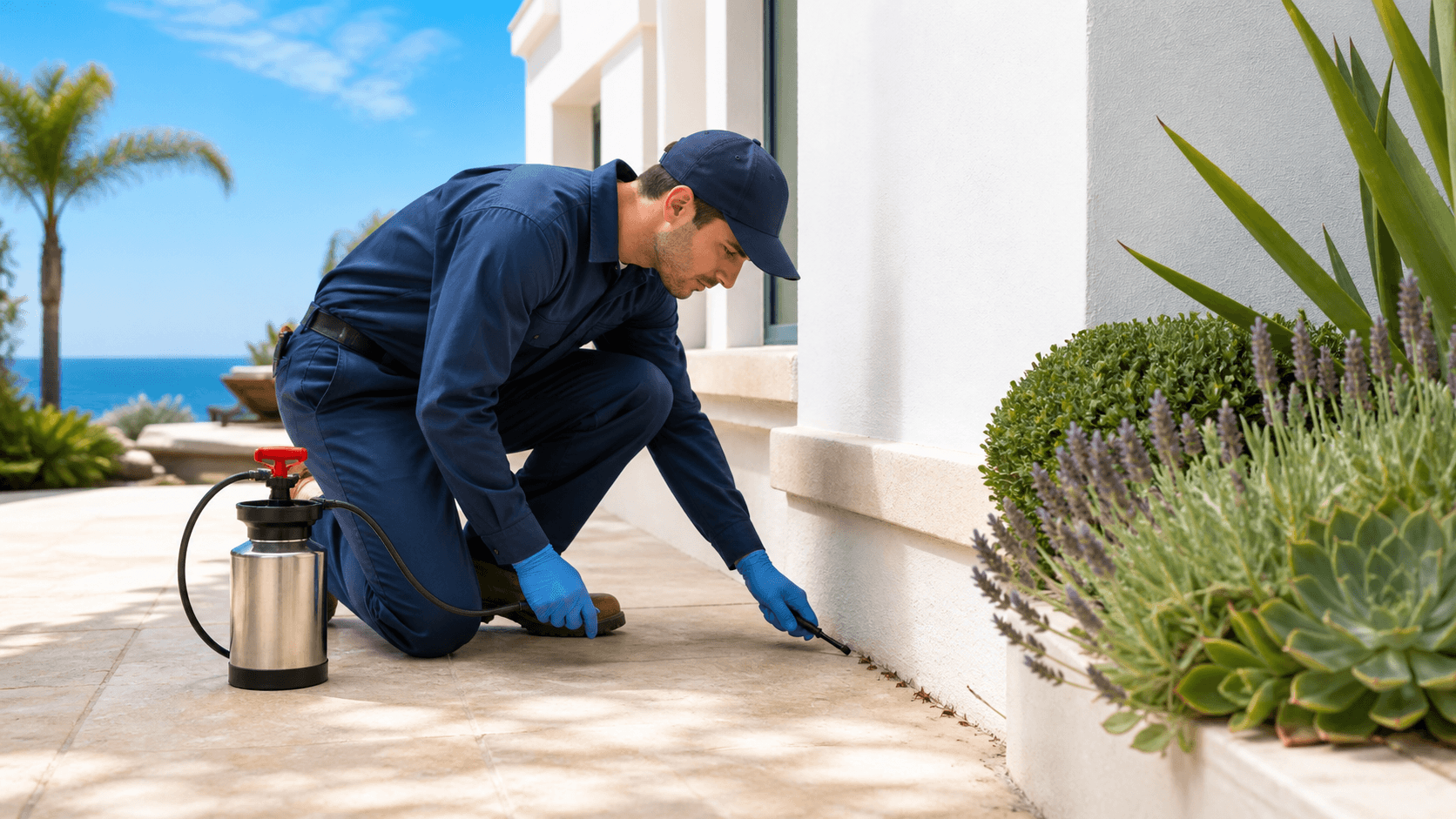
Safer options focus on targeted work, not blanket spraying. Small crack-and-crevice treatments, traps for certain pests, and simple tools like door sweeps and good screens can make a big difference. The key is knowing where pests hide and how they move.
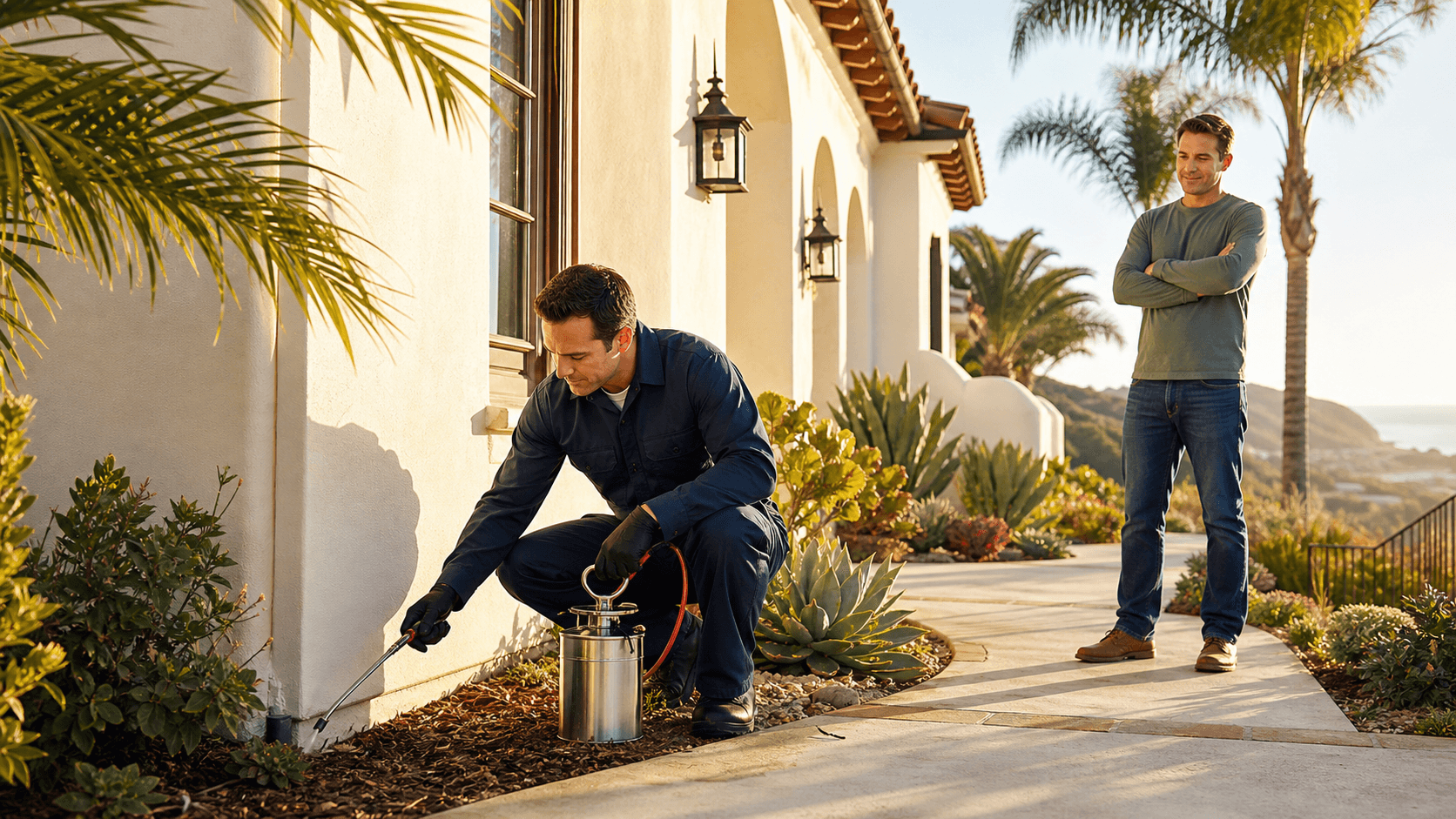
A licensed pest control pro in Laguna Beach is trained to choose products and methods that fit coastal conditions. Application is focused on problem areas, with care for how treatments might affect kids, pets, and even sea life down the hill.
Food, Trash, and Landscaping That Invite Pests
Outdoor dining is part of coastal life. Open patio doors, snacks on the balcony, and weekend barbecues all leave crumbs and spills behind. To pests, that is a steady buffet. Homes close to the beach, greenbelts, or canyons often see more pest traffic because there is food and shelter nearby.
Some of the most common attractant mistakes we see include:
- Uncovered trash and recycling that sit outside for days
- Outdoor pet bowls with leftover food or standing water
- Fruit trees dropping overripe fruit that is never picked up
- Thick ivy, dense vines, or heavy ground cover right against the house
- Cluttered garages full of cardboard boxes and loose fabric
As we move into fall and people start storing more holiday decor and beach gear, garages and side yards can turn into pest hotels. A few simple habits help cut that risk:
- Use tight trash can lids and rinse recycling when possible
- Keep pet food indoors and wash bowls daily
- Trim plants and shrubs 12 to 18 inches away from walls
- Use gravel or rock borders instead of thick ground cover at the foundation
- Store decorations and gear in sealed plastic bins instead of cardboard
When food and shelter are harder to find, ants, rodents, and wasps are less interested in sticking around.
Seasonal Inspections and Termite Watch
Coastal homes work on a different rhythm than homes farther inland. The weather stays fairly mild, pests do not take much of a break, and moisture is a constant factor. Fall is a smart time to look over your home, before holiday schedules get busy and before more rain adds extra moisture to wood.
Waiting until you see clear damage is a mistake. By the time you notice sagging porch steps, soft window frames, or hollow spots in trim, the problem has often been building for a long time. Signs like bubbling paint, mud tubes along the foundation, or piles of droppings in attics and garages should never be ignored.
A simple DIY seasonal checklist can help you stay ahead:
- Check attic vents and screens for holes or loose edges
- Look under sinks and around water heaters for leaks or damp wood
- Scan windowsills and baseboards for termite wings or tiny piles of frass
- Listen and look in the garage and attic for signs of rodents, like gnaw marks or nests
If you spot any of these, it is smart to bring in a professional for a closer look. Ongoing pest service can also catch problems early, especially in older homes or houses with lots of wood features.
Protecting Kids, Pets, and the Ocean While Treating Pests
Living near the coast comes with an extra responsibility. Anything that washes off your property can move toward storm drains and, eventually, the ocean. That includes leftover yard products and misused pest control chemicals. At the same time, you want your kids and pets to stay safe around treated areas.
Some common mistakes include:
- Spraying lawns or patios right before rain, which lets products wash away
- Using old, unknown, or unapproved chemicals found in the garage
- Treating far more often or more heavily than the label allows
These habits can harm helpful insects, stress your pets, and affect water quality. A safer approach starts with good prevention and sealing, then adds treatments only where they are truly needed. Kid- and pet-conscious products, baits placed out of reach, and focused applications around key entry points all lower the risk.
As a locally owned company in San Clemente, we understand how coastal conditions in Orange County shape pest behavior and how local rules protect the environment. Careful planning lets us control pests while still respecting the ocean that makes Laguna Beach such a special place to live.
Protect Your Laguna Beach Home With Trusted Local Experts
If you are ready to stop worrying about pests and get back to enjoying your coastal home, we are here to help. At Recon Pest Control - SEO, our team provides targeted, family-friendly treatments tailored to your property's unique conditions with pest control in Laguna Beach. We will inspect, treat, and set up a prevention plan so problems do not return. Have questions or need a fast appointment? Just contact us and we will respond promptly.