Stop Rats in Their Tracks Before Winter Sets In
Rat removal in attics is not something to push off until later, especially in Orange County rental homes. As fall rolls in and people get busy with school, sports, and holiday plans, rats are looking for quiet, hidden spots to settle in. Attics in rentals are a favorite, especially between tenants or when people travel for the holidays.
Waiting to deal with rats can lead to real trouble. They spread germs, chew on wires, damage insulation, keep people up at night, and trigger complaints or even legal problems between tenants and landlords. In this guide, we will walk through how to spot early rat activity, what safe steps are realistic for you to do, when it is time to call in a pro, and how a local team can protect kids, pets, and property long term.
Why Rats Love Orange County Rental Attics
Fall in Orange County means shorter days, more time indoors, and plenty of late-night activity for rats. Roof rats are very common in this area. They often live in palms, hedges, and vines, then move upward into attics when they want a safer, more stable place to nest.
Rental homes can be especially at risk because of how they are used. Gaps between tenants can let rats move in with no one hearing them, and frequent move-ins and move-outs can bring boxes, furniture, and clutter that give rats more cover. Food left behind in kitchens, garages, or patios also attracts them, and outdoor trash or pet food that sits out longer than it should can keep them coming back.
The buildings themselves can also make it easy for rats to sneak inside. In Orange County, many rentals have features like:
- Spanish tile roofs with small openings along the edges
- Older rooflines with gaps at eaves and soffits
- Spaces around pipes, vents, and cables that were never fully sealed
- Shared walls or connected attics in multi-unit properties
All it takes is a gap the size of a dime, and a rat can work its way in and turn an empty attic into a home.
Early Warning Signs of Rats in Your Attic
Rats are active mostly at night, so you might not see them, but they leave plenty of clues. Some of the most common early signs include:
- Droppings along attic beams, in corners, or near access doors
- Gnaw marks on wood, plastic, or cardboard boxes
- Dark, greasy rub marks along rafters and entry routes
- Scratching, scurrying, or thumping sounds in ceilings or walls after dark
Smell can be a big clue too. A strong ammonia-like odor in certain rooms, especially near the ceiling, can mean rat urine. You might also see shredded insulation, paper, or fabric piled up as nesting material.
Pets are often the first to notice a problem. Dogs may bark or stare at a certain wall or ceiling spot. Cats may sit and watch a vent or hallway for long periods as if they are "on patrol."
Ignoring these early signs can lead to bigger problems. Chewed electrical wiring can create a fire risk, and ruined insulation can hurt comfort and energy efficiency. Rat colonies can also grow quickly as they breed and spread, and the longer the issue continues, the more likely it is to trigger ongoing tenant complaints, bad reviews, and lease issues.
Catching the problem early makes rat removal in attics safer, cleaner, and easier on everyone.
Safe DIY Steps for Rats in Attic Removal
If you suspect rats, safety needs to come first. Rat droppings and urine can carry germs, and a cornered rat can bite. Before you do anything, keep kids and pets away from attic access and areas where you plan to work.
A few basic safety steps include:
- Turn off exposed electrical in areas you will check, if possible
- Wear disposable gloves and a mask when near droppings or nests
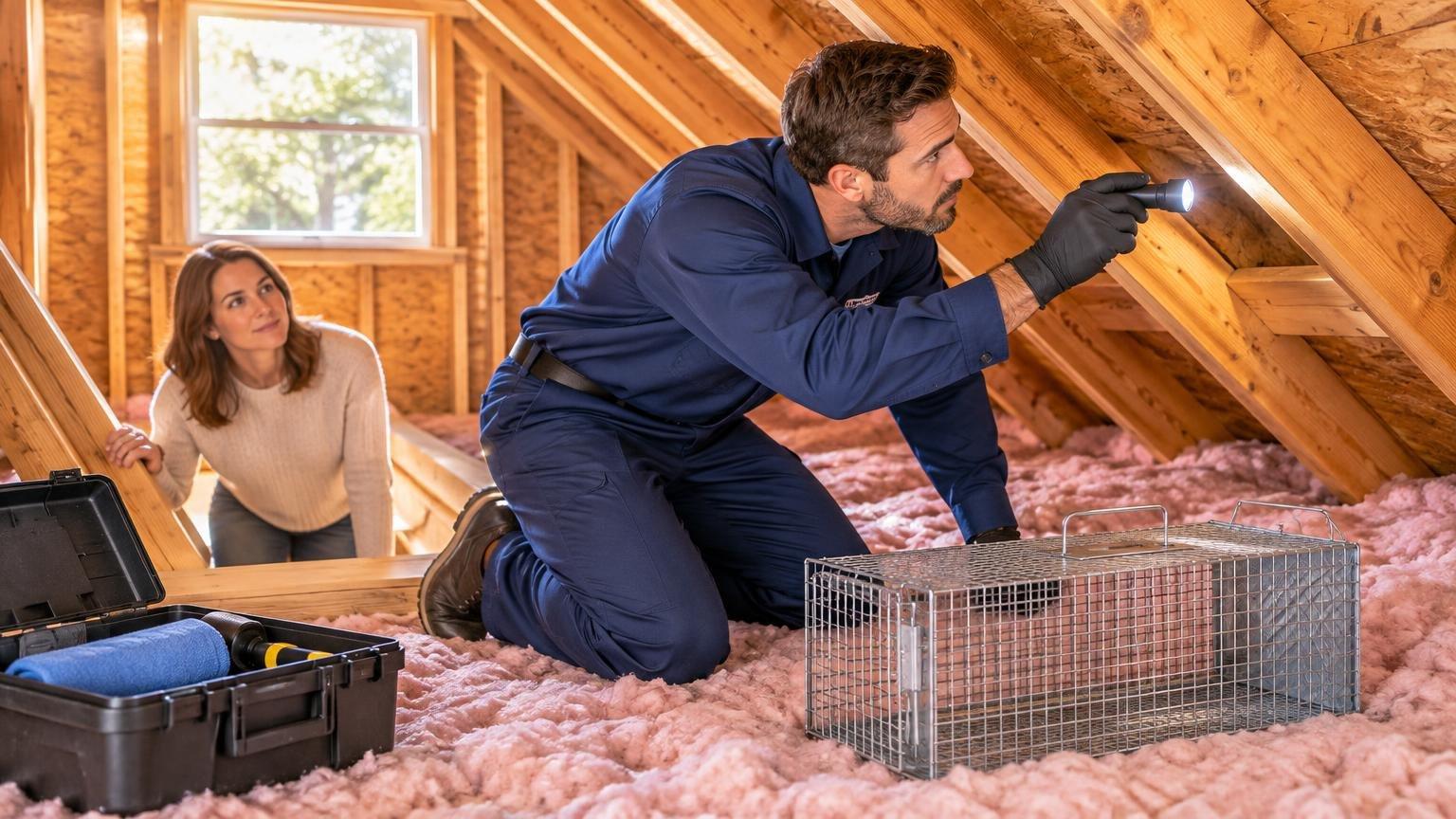
- Use a flashlight and stay on solid framing or walk boards in the attic
- Keep pets out of garages, sheds, and side yards where traps might go
Some limited DIY actions can help slow the problem while you plan your next move. Start by removing easy food sources like open pet food, bird seed, and trash, and store pantry food and pet food in sealed containers. Clear clutter away from exterior walls so you can see gaps and activity, and gently inspect near the attic access without crawling into tight spaces.
Snap traps, when used carefully, can be safer than random poison. They should be placed along known travel paths and handled with care.
What you should avoid trying on your own:
- Over-the-counter poisons that can lead to dead rats hidden in walls
- Loose bait where kids, pets, or non-target animals could reach it
- Sealing holes before the rats are fully removed, which can trap them inside living areas
- Any steps that conflict with your lease terms or property rules
Rats in attic removal can get complex quickly, and in rental homes it often makes more sense to bring in a trained professional.
When to Call a Professional in Orange County
Sometimes a few careful steps are enough to confirm what is going on. If the problem keeps going, that is when professional help becomes important for both tenants and landlords.
It is time to call in a pro if you notice:
- Scratching or scurrying sounds that continue after a few days of trapping
- Strong odors from walls or ceilings that do not go away
- Visible roof gaps, soffit damage, or chewed entry points
- Rat signs in more than one unit in a multi-family property
A proper professional service for rats in attic removal should include:
- A full inspection, inside and out, to find every entry point
- Identification of the rodent species and main nesting areas
- Targeted trapping instead of random baiting
- Careful sealing of active and potential entry points
- Sanitation of droppings and nesting material where needed
- Follow-up visits to confirm the problem is fully solved
Local experience makes a real difference. A company based in Orange County understands common rat species, how Spanish tile and local construction styles create hidden gaps, and how HOAs and property managers prefer problems to be handled and documented.
Long-Term Rodent Proofing for Rental Properties
The best rat problem is the one that never gets started. Long-term prevention protects health, property, and tenant relationships.
On the outside of the home, focus on sealing and trimming:
- Seal any exterior gap larger than a dime with strong materials
- Repair torn window and door screens
- Add tight-fitting vent covers designed to block rodents
- Trim trees, palms, and vines away from roofs and eaves
Inside and in the attic, small upgrades can go a long way:
- Store items in plastic bins instead of open cardboard boxes
- Keep attic walkways clear so inspections are quick and safe
- Reinforce around attic hatches, plumbing, and wiring cutouts
- Replace badly damaged insulation when rats have been present
Clear roles between landlord and tenant help keep rentals rat-free. A good plan usually includes:
- Owners handling structure, sealing, and professional inspections
- Tenants keeping food sealed, trash managed, and surfaces clean
- Lease language that explains how and when to report rodent signs
- Routine checkups, such as seasonal inspections or move-in/move-out checks
When owners, tenants, and a trusted local pest control partner all work together, Orange County rental homes can stay comfortable and rodent-free, even during busy fall and holiday seasons.
Protect Your Home With Fast, Effective Rodent Removal
If you are hearing scratching overhead or finding droppings, our team can provide safe, thorough rats in attic removal so you can rest easy again. At Recon Pest Control - SEO, we inspect, remove, and help prevent future infestations using proven methods tailored to your home. Reach out today to schedule service or ask questions, and we will walk you through the next steps. If you are ready to book an appointment now, simply contact us.