Pet-Safe Yard Protection for Fleas and Ticks
Fleas and ticks love Orange County almost as much as our pets do. Warm days, lots of sunshine, and an outdoor lifestyle mean these pests stay active well into fall and beyond, so they do not just disappear when the calendar changes.
That is a problem for dogs and cats. Fleas and ticks can cause itchy skin, allergic reactions, tapeworms, and serious diseases like Lyme disease. Even indoor pets can be exposed when we bring pests in on our shoes or clothing, or when they spend a little time in the yard. In this article, we will walk through how to keep your yard comfortable and pest-free using pet-safe pest control in Orange County, along with simple habits that help protect your animals without exposing them to harsh chemicals.
How Fleas and Ticks Invade Orange County Yards
Fleas and ticks do not just appear out of nowhere, they hitchhike their way in. In Orange County neighborhoods, they commonly arrive when neighborhood pets pass along fence lines, wildlife like opossums, raccoons, and rodents move through the property, stray cats nap under bushes or on patios, or people unknowingly track pests in on shoes, socks, and picnic blankets.
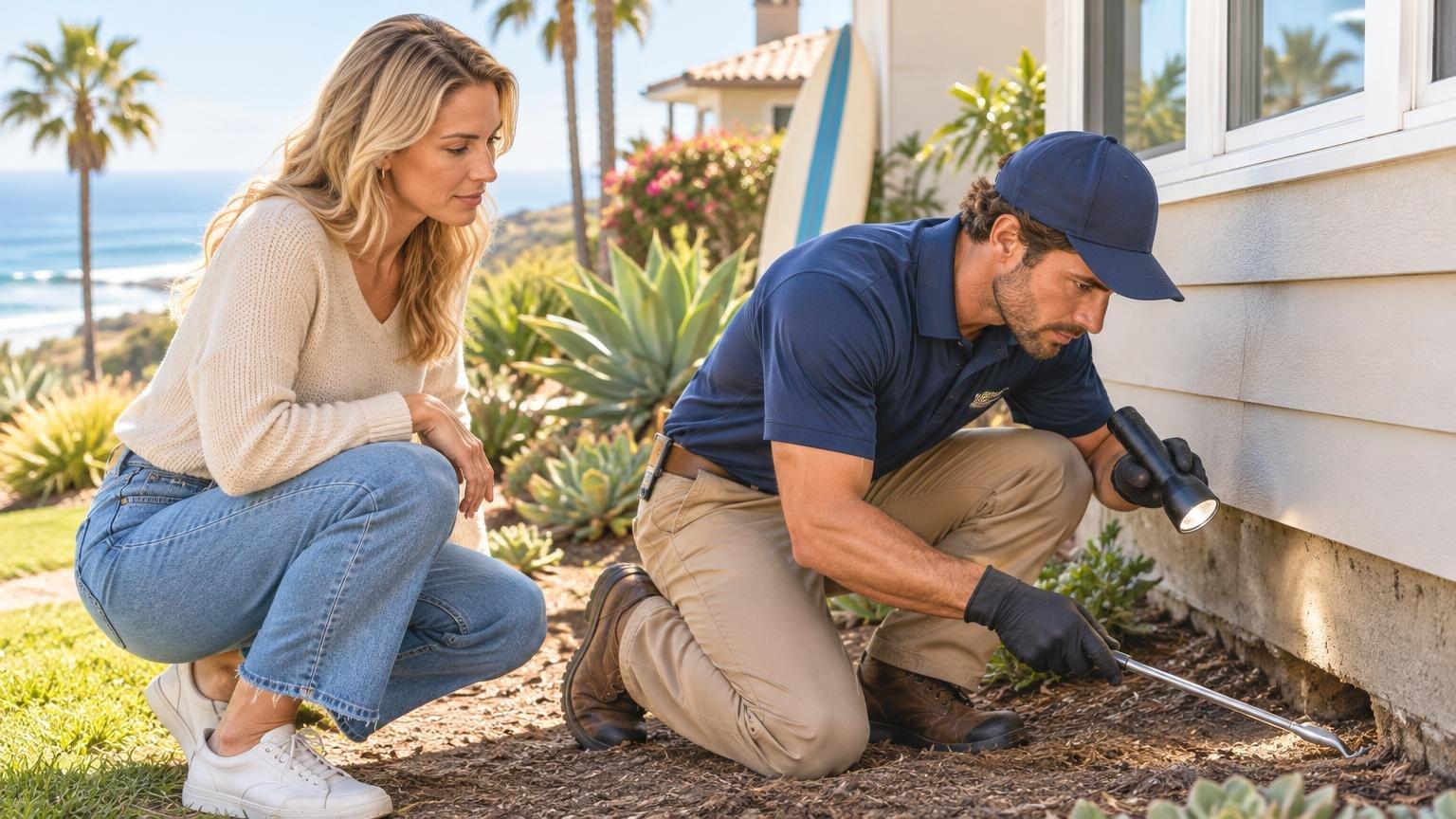
Once they are in your yard, they look for cool, hidden places to wait for a host. In local yards, hotspots often include:
- Shaded areas where the sun does not hit all day
- Under decks or raised patios
- Along fences and walls where pets like to patrol
- Dense groundcover, ivy, or thick shrubs
- Spots where dogs like to rest or use the bathroom
Our mild fall weather lets the flea and tick life cycle keep going almost year-round. Eggs and larvae tucked in soil, thatch, and cracks can develop without a long break, so counting on "cooler weather" to solve the problem usually leads to a second wave of pests right when families are enjoying more backyard time, holidays, and evening gatherings.
What Makes a Yard Treatment Truly Pet-Safe
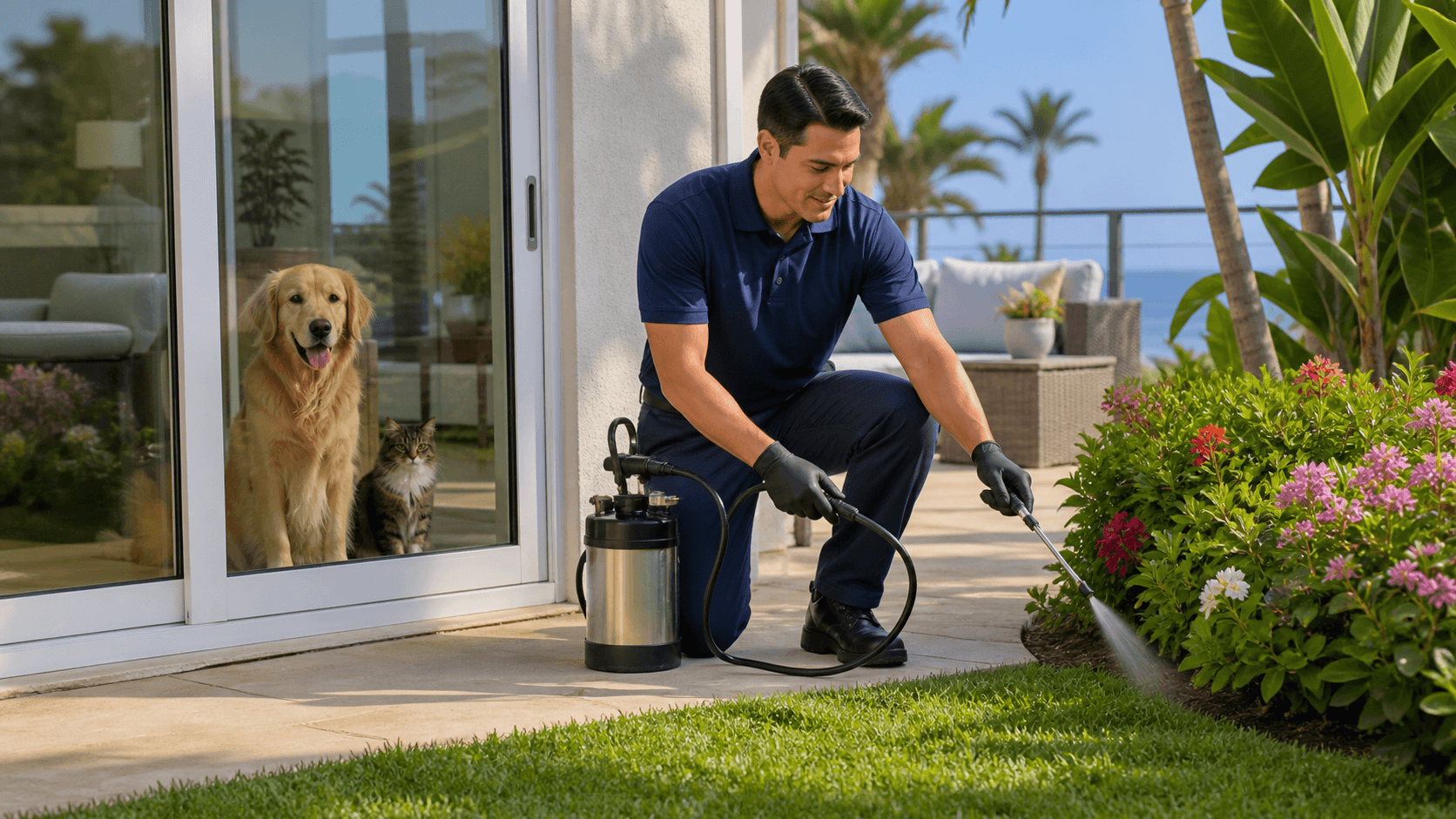
When people hear "pet-safe," they sometimes think it means "totally harmless in any amount." That is not how pest control works. Pet-safe pest control in Orange County is really about using the right products, in the right places, and in the right way, so your pets are not exposed to risky levels.
A careful, pet-focused approach usually includes:
- Choosing products that are labeled for use around homes and lawns
- Applying them exactly as the label says, with correct mixing and timing
- Targeting hotspots instead of coating every inch of the yard
- Keeping pets away during treatment and until re-entry times are met
You may also hear about a few common treatment types. These can include traditional sprays used to treat shaded soil, cracks, and edges where fleas and ticks hide; targeted granulars that settle into the top layer of soil and mulch; insect growth regulators (IGRs) that interrupt the flea life cycle so eggs and larvae cannot mature; and natural or low-toxicity products, which can be helpful but still need careful use.
When you look at a label, pay attention to:
- EPA registration information
- Notes about safety around dogs and cats
- Clear re-entry instructions, like how long to keep pets off treated areas
It is best to avoid off-label mixing, home "bug bombs," or heavy use of essential oils on pets and in yards. These can be irritating or unsafe for animals, especially cats, and often do not solve the root of the problem.
Simple Yard Prep to Cut Down Fleas and Ticks
Good yard prep makes any treatment work better and also makes your yard less welcoming to pests in general. A quick checklist before treatment can include:
- Mow grass short but not scalped, so sunlight can reach the soil
- Trim dense shrubs and low branches to open up airflow
- Rake up leaf litter, yard waste, and old mulch piles
- Clean up pet waste regularly
- Shake out or wash outdoor pet bedding and blankets
Beyond basic cleanup, it helps to scan the yard for "pest magnets", places that quietly support flea and tick activity or attract the animals that carry them. Common examples include thick groundcover where dogs or cats like to lie down, clutter under porches or decks (and around stored items), birdseed scattered on the ground that draws rodents, and pet food or water left outside overnight.
For extra support between services, some safe at-home habits include:
- Running a fine-tooth flea comb through your dog or cat after yard play
- Washing pet bedding on a hot setting on a regular schedule
- Talking to a professional about careful use of outdoor-safe diatomaceous earth in tight cracks or gaps, with pets kept away from any dust
These steps do not replace professional pest control, but they help reduce the places where fleas and ticks can hide and breed.
Choosing Pet-Safe Pest Control in Orange County
Sometimes, even with good habits, pests win. It may be time to bring in a professional when:
- Your family keeps getting bites on ankles or legs
- You see fleas on pets or furniture
- You find ticks after yard time or walks
- Store-bought sprays or foggers do not seem to help
When you look for help, there are a few things that matter more than anything else:
- Local experience with the specific pest pressures in Orange County
- Kid- and pet-safe treatment protocols that focus on targeted areas
- Clear explanations of which products are used and where
- Simple, written instructions on how long to keep pets out of treated spaces
At Recon Pest Control in San Clemente, we focus on targeted applications around key hotspots like shade lines, pet paths, and resting areas instead of blanket spraying for no reason. We match our yard treatments with whatever flea and tick plan your veterinarian recommends, and we offer options for seasonal protection programs so you are not starting from scratch each fall.
Working with Your Veterinarian for Complete Protection
A treated yard is only half of the equation. Fleas and ticks can still show up on trails, sidewalks, and in public parks, so vet-recommended preventives for each pet are a big part of full protection.
Your veterinarian can help you choose between:
- Topical treatments applied to the skin
- Oral medications
- Flea and tick collars
It also helps to go into the conversation with a few clear questions. Good ones include which preventives are best for the risks in Orange County, how often each pet should be treated based on age, weight, and health, and what to do if you see signs of an allergic reaction or heavy infestation.
At home, a simple weekly monitoring routine can catch problems early. Check:
- Ears, neck, and collar area
- Belly and inner thighs
- Base of the tail and lower back
- Between toes and around leg joints
You can also lay a white towel on the floor and gently brush your pet over it. Small black specks that turn reddish when wet can be flea dirt, which is a sign you need to act quickly with your vet and a pest control professional.
Keeping Your Yard Pet-Safe All Year
In our warm climate, fleas and ticks are more of a year-round project than a one-time fix. A simple plan can look like this:
- Fall: clean up the yard and treat key areas before holiday gatherings and extra outdoor time
- Winter: keep up light monitoring and good yard habits
- Spring: check in on any new growth or clutter that could shelter pests
- Summer: reinforce protection before peak outdoor activities
As a quick guide, DIY habits like regular grooming, washing bedding, and basic yard care can be enough when you see only an occasional pest and no one is getting bitten. If you notice persistent bites, visible fleas or ticks, or you have several pets sharing the same spaces, that is usually the point when professional pet-safe pest control in Orange County makes a clear difference.
A calm, comfortable yard where your dogs and cats can nap, play, and explore without constant scratching is possible. With smart yard prep, the right treatments, and support from your vet, you can keep pests in check while keeping your pets safe.
Protect Your Home With Pet-Safe Pest Control Today
If you are ready to stop worrying about pests and protect your pets at the same time, we are here to help. At Recon Pest Control - SEO, our experts specialize in pet-safe pest control in Orange County tailored to your home and family. Schedule your service or ask a question anytime by using our contact page. Let us create a customized plan so you can feel confident your home is protected safely and effectively.