Protect Your San Clemente Home From Rodent Takeovers
Rodent exclusion in San Clemente is one of the smartest ways to protect your home, health, and peace of mind. Instead of chasing rats and mice after they get inside, exclusion focuses on blocking the tiny gaps they use to slip in so the infestation never really starts. That matters in a coastal city like ours, where homes, yards, and businesses give rodents plenty of places to hide and plenty of food and water.
On a warm evening, kids and pets might be playing in the yard while rodents move along fences, rooflines, and thick plants. You might not see them, but they can be active in the attic, garage, or under the house. Traps and baits can knock down the current population, but if the building is full of openings, more rodents will just keep coming.
Here, we will walk through how a professional rodent exclusion inspection works, which seal materials actually hold up over time, and how to keep a simple long-term maintenance plan going. With a clear plan, you can enjoy your home without wondering what is scratching in the walls at night.
Why Rodent Exclusion in San Clemente Matters Now
San Clemente and much of Orange County stay warm and comfortable most of the year. That means rodents do not slow down for long. Mild nights, dense neighborhoods, and lots of shared fences and walls keep pressure on homes year-round, not only in one season.
Late summer brings its own problems. The sun heats up open areas and exposed sheds, so rodents look for cooler, darker spots like crawlspaces, garages, or the shade under decks and patios. Getting ahead of that movement during summer helps keep them out before fall routines like school, sports, and holidays take over your schedule.
Rodents bring more than just a scare when you see one run across the floor. They can:
- Contaminate food and kitchen surfaces
- Chew electrical wiring and create a fire risk
- Tear up insulation and stored items for nesting
- Leave strong smells from urine and droppings
Basic pest control focuses on reducing or removing the rodents that are already inside. Exclusion is different. It is more like a prevention system that lowers long-term rodent pressure and can cut down on future treatments. When the main entry points are sealed, every new rodent that walks your fence line is less likely to become your problem.
Inside a Professional Rodent Exclusion Inspection
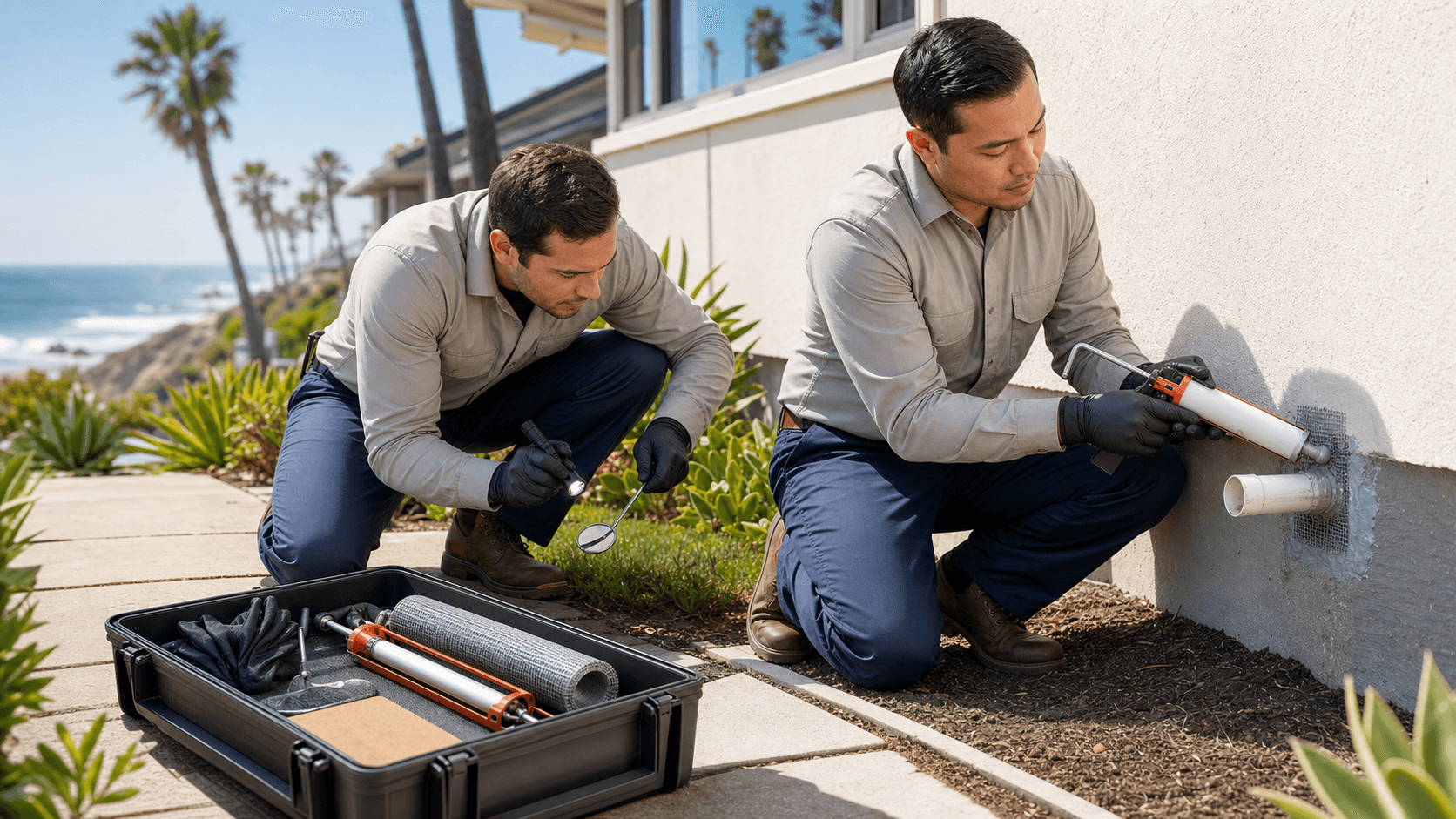
A professional rodent exclusion inspection is much more than a quick look with a flashlight. We move slowly around the entire structure, taking notes on both current activity and possible future access points.
A typical inspection includes:
- Exterior foundation, siding, and utility lines
- Roofline, eaves, vents, and accessible attic spaces
- Crawlspaces if the home has them
- Garages, storage areas, and attached structures
- Landscaping that touches or hangs over the building
We look for clear signs of rodents, such as:
- Greasy rub marks along walls and beams
- Gnaw marks on wood, plastic, or wiring
- Droppings in corners, on ledges, or near food sources
- Shredded insulation or paper that could be used as nesting
- Holes and gaps, even ones as small as a dime
Tools help us check hard-to-see spots. Flashlights and mirrors reveal hidden corners, while ladders give access to roofs and attic openings. We also trace likely rodent "highways," such as fence tops, tree branches touching the roof, and utility lines that run straight to the house.
If you want to do a quick self-check before calling a pro, focus on the basics:
- Inspect doors, especially the garage door, for gaps at the bottom
- Look at weatherstripping to see if light shines through when doors are closed
- Peek under sinks and behind appliances for droppings or chew marks
- Check the attic hatch, if safe to access, for gaps and loose covers
These simple checks will not replace a professional inspection, but they can give you a sense of whether rodents might already be around.
Best Seal Materials for Long-Lasting Rodent Barriers
Rodents can chew through many common building materials, so the choice of seal products really matters. Pros rely on materials that resist teeth, weather, and time.
Some of the core materials include:
- Steel wool or copper mesh that rodents cannot easily chew
- Galvanized hardware cloth with small openings for vents
- Durable exterior caulks made for gaps and cracks
- Concrete or mortar for larger holes in masonry
- Metal flashing or sheet metal for big or odd-shaped gaps
Each material has a "best use" spot:
- Steel or copper mesh works well around pipes, AC lines, and utility penetrations
- Hardware cloth can cover foundation vents, crawlspace openings, and larger gaps
- Caulk is helpful for hairline cracks or as a finish over packed mesh
- Door sweeps help close gaps at the bottom of doors, including garage side doors
Some DIY materials cause more problems than they solve. Spray foam on its own is not a good rodent barrier, because rodents can chew right through it. Soft caulk, duct tape, or cardboard are also not good choices. Blocking vents without considering airflow can also trap moisture, which can lead to other issues.
For small projects, a careful step-by-step approach is important:
- First, identify gaps around pipes, AC lines, dryer vents, and cable lines
- Pack steel or copper mesh tightly into these openings
- Seal the edges with exterior caulk or mortar to hold the mesh in place
- Install pest-resistant vent covers and solid door sweeps on garage and side doors
For anything higher up or hard to reach, or if you see signs of active rodents, it is safer and more effective to let trained technicians handle the work.
Building a Long-Term Rodent Maintenance Plan
Rodent exclusion in San Clemente is not a one-time project you can forget about. Homes settle, new holes appear when work is done on the property, and plants grow back quickly in our climate. A simple and steady maintenance plan keeps your hard work from fading.
A practical yearly schedule might look like this:
- Summer and early fall: check rooflines, eaves, and attics before rodent pressure increases with shorter days and busier schedules
- Late winter or spring: clean up the yard, trim vegetation away from walls and the roof, and check fences and sheds
- Every few months: do a quick walk-around to look for new gaps, door issues, and clutter that may provide shelter
Sanitation and habitat changes are also a big part of the plan. Rodents like easy food and hidden shelter, so small habits help:
- Keep trash in bins with tight lids
- Pick up fallen fruit and clean up around grills and outdoor eating areas
- Store pet food in sealed containers, not in bags on the floor
- Reduce heavy clutter in garages and sheds where rodents can nest
- Keep firewood off the ground and away from walls
Professional support is helpful when bigger changes happen. It is smart to bring a pro back after remodel work, roof, plumbing, or other projects, or if you notice new droppings, smells, or sounds. If your own sealing never seems to keep up with activity, a full inspection and reset can save you a lot of stress.
When to Call Recon Pest Control for Extra Backup
Sometimes, the signs are clear that it is time for expert help. You might notice rodents in the daytime, which often means the population is growing. Other warning signs include strong urine or musky odors, scratching or gnawing sounds in walls or ceilings, chewed wiring or stored belongings, or traps catching rodents over and over without a real break in activity.
As a locally owned, licensed, and insured company serving San Clemente and the rest of Orange County, we focus on safe, effective treatments and careful exclusion work. We provide kid- and pet-safe services for homes and businesses, along with same-day help when fast action is needed. Our goal is to combine detailed inspections, long-lasting sealing, and a clear maintenance plan so your property stays protected over time.
With the right mix of exclusion, smart materials, and steady upkeep, rodents do not have to be part of your life in San Clemente. A thoughtful plan now means more quiet nights, cleaner spaces, and fewer surprises later on.
Protect Your San Clemente Home From Rodent Problems Today
If you are starting to see signs of rodents, we are ready to inspect your property and provide targeted rodent exclusion in San Clemente. At Recon Pest Control - SEO, we focus on long-term prevention so you can feel confident your home is secure. Reach out to our team with a quick message through our contact page, and we will help you schedule a convenient appointment. Let us identify entry points and customize a plan that keeps rodents out for good.