Stop Coastal Ants Before They Invade This Season
Ants love Orange County's fall. Warm sunny days, cooler nights, and all that holiday food starting to show up in the kitchen make your coastal home very inviting. From San Clemente to Dana Point and Laguna Niguel, ants start moving more, searching for easy water and sugar inside.
Seasonal ant infestation treatment matters right now. A few ants on the counter can quickly turn into a steady trail across your kitchen, pantry, and even kids' bedrooms. Ants can get into food, bother pets, and in some cases get into outlets and wiring.
We are Recon Pest Control, a locally owned, licensed, and insured pest control company based in San Clemente. We focus on kid- and pet-safe treatments that work for coastal homes and apartments. In this guide, we will share practical steps you can use yourself and explain when calling a professional can save a lot of time and frustration.
Why Coastal Orange County Homes Attract Ants
Coastal life is great for people and ants. The air is salty, the weather is mild all year, and most neighborhoods are green and well watered. That mix keeps ant colonies active through fall, instead of slowing down.
A few reasons coastal homes pull ants in so strongly include:
- Mild temperatures that keep ants moving day and night
- Dense neighborhoods, which let colonies spread from yard to yard
- Regular irrigation that keeps soil damp and plants lush
- Plenty of outdoor food sources like trash, pet bowls, and fruit trees
Around Orange County, homeowners tend to see a few main types of ants:
- Argentine ants, small and usually forming long, steady trails into kitchens and bathrooms
- Odorous house ants, tiny ants that give off a strong smell when crushed
- Carpenter ants, larger black or dark ants that are often linked with damp or damaged wood
Each type behaves a bit differently, but they all need food, water, and safe shelter. Coastal homes give them lots of options. Common entry points we see include slab cracks, gaps in stucco, spaces around deck posts, loose foundation vents, roofline openings, and holes around pipes, cables, and AC lines.
Once ants find even a hairline gap, they can send thousands of workers through that same path.
Spot the Early Warning Signs Before Ants Explode
Catching ants early is the easiest way to stop a major ant infestation treatment from becoming a big project. Many homeowners only act once they see large trails. By then, the colony is usually well established and can be harder to control.
Early warning signs include:
- A few random ants on the kitchen counter or bathroom sink
- Tiny trails along exterior walls, fences, or garden borders
- Ants around trash cans, recycling, and outdoor pet food
- Ants gathering near irrigation lines, leaky hoses, or damp soil
You may also notice:
- Small piles of loose soil next to concrete, slabs, or pavers
- Soft, moisture-damaged wood on decks, fascia boards, or fences
- Light around doors or windows where weatherstripping is worn
- Increased insect activity at night, especially near porch lights
A simple weekly "ant check" fits easily into your routine. Once a week:
- Walk your kitchen and pantry, check for crumbs, sticky spots, and open food
- Open cabinets under sinks and look for moisture, drips, or ants
- Walk the outside perimeter of your home, watching walls, foundation, and planters
- Take a quick look in the garage, especially near water heaters and stored food
This habit only takes a few minutes but can help you spot problems before they become full trails.
DIY Ant Infestation Treatment You Can Safely Do Now
We always put safety first, especially in homes with kids and pets. If you want to start with DIY steps, focus on simple, careful methods and follow product labels closely.
Keep these safety tips in mind:
- Choose enclosed bait stations instead of loose powders or liquids
- Avoid heavy indoor spraying, especially around toys, beds, and pet areas
- Store all products high and locked, not under sinks where kids can reach
- Never mix different pest products together
For indoor ant infestation treatment, you can:
- Follow the trail with your eyes to see where ants enter and where they seem to go.
- Clean the trail with soapy water or a vinegar solution to remove their scent path.
- Place slow-acting bait stations close to, but not directly on, the trail.
- Do not spray over the bait and do not wipe away ants that are feeding.
- Give the bait time to spread through the colony.
For outdoor defense around your coastal home:
- Trim shrubs, vines, and trees away from walls and roofs so ants cannot use them as bridges
- Seal small gaps with caulk where pipes, wires, and cables enter the home
- Fix irrigation leaks and adjust watering so soil is not constantly wet
- Keep trash and recycling containers tightly closed and rinsed when possible
- Use outdoor bait stations around the foundation and in landscape beds where ants are active
These steps can reduce food and water sources and make your home less inviting.
When DIY Is Not Enough: Professional Treatment Options
Sometimes ants keep coming back no matter how careful you are. That is usually a sign the colony is large, hidden, or both. It may be time to call a professional if you notice:
- Ant trails returning again and again after baiting
- Ants coming from inside walls, outlets, or light switches
- Large black ants or signs that look like carpenter ant activity in wood
- Widespread ant activity across your yard, planters, and walkways
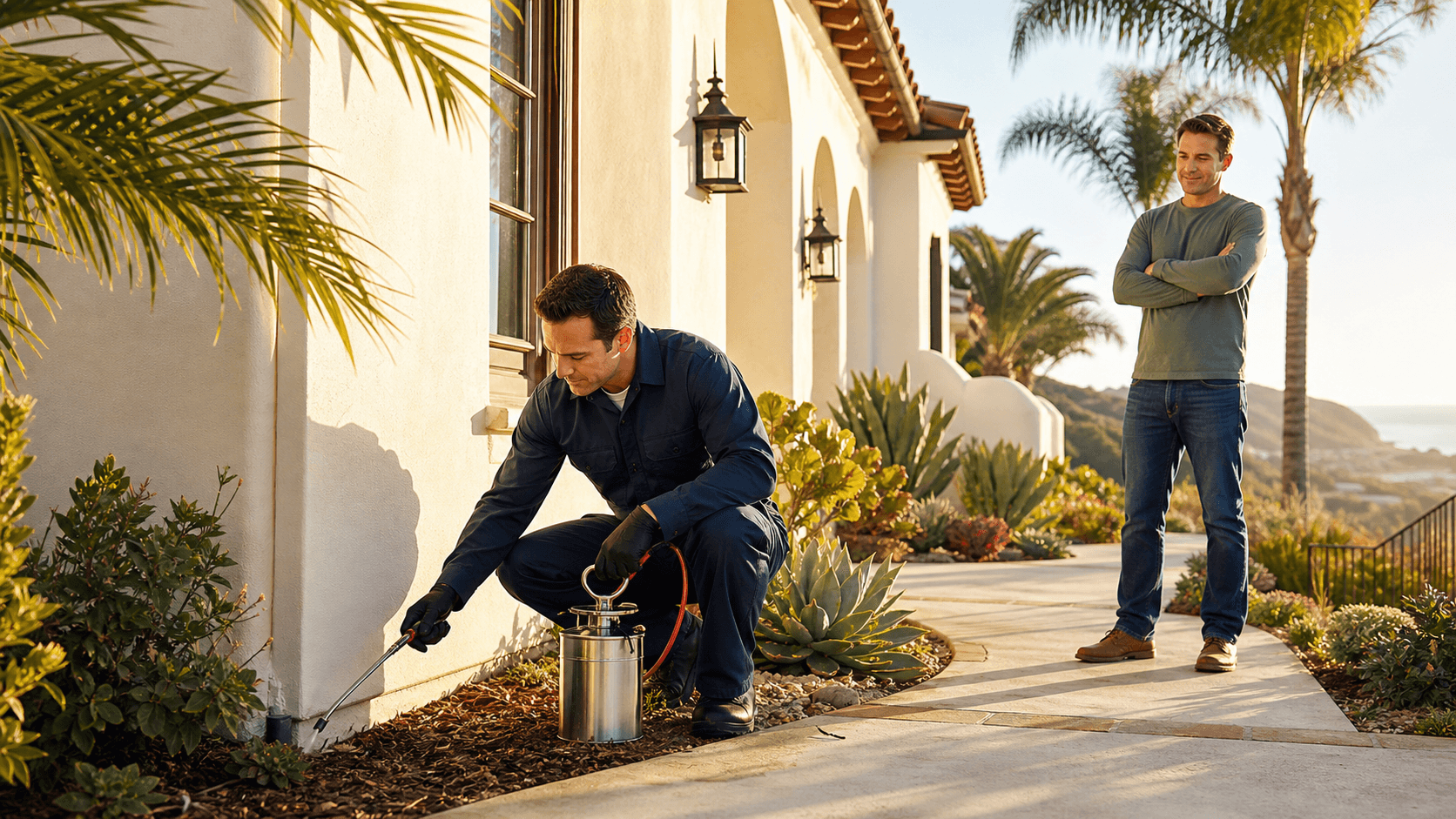
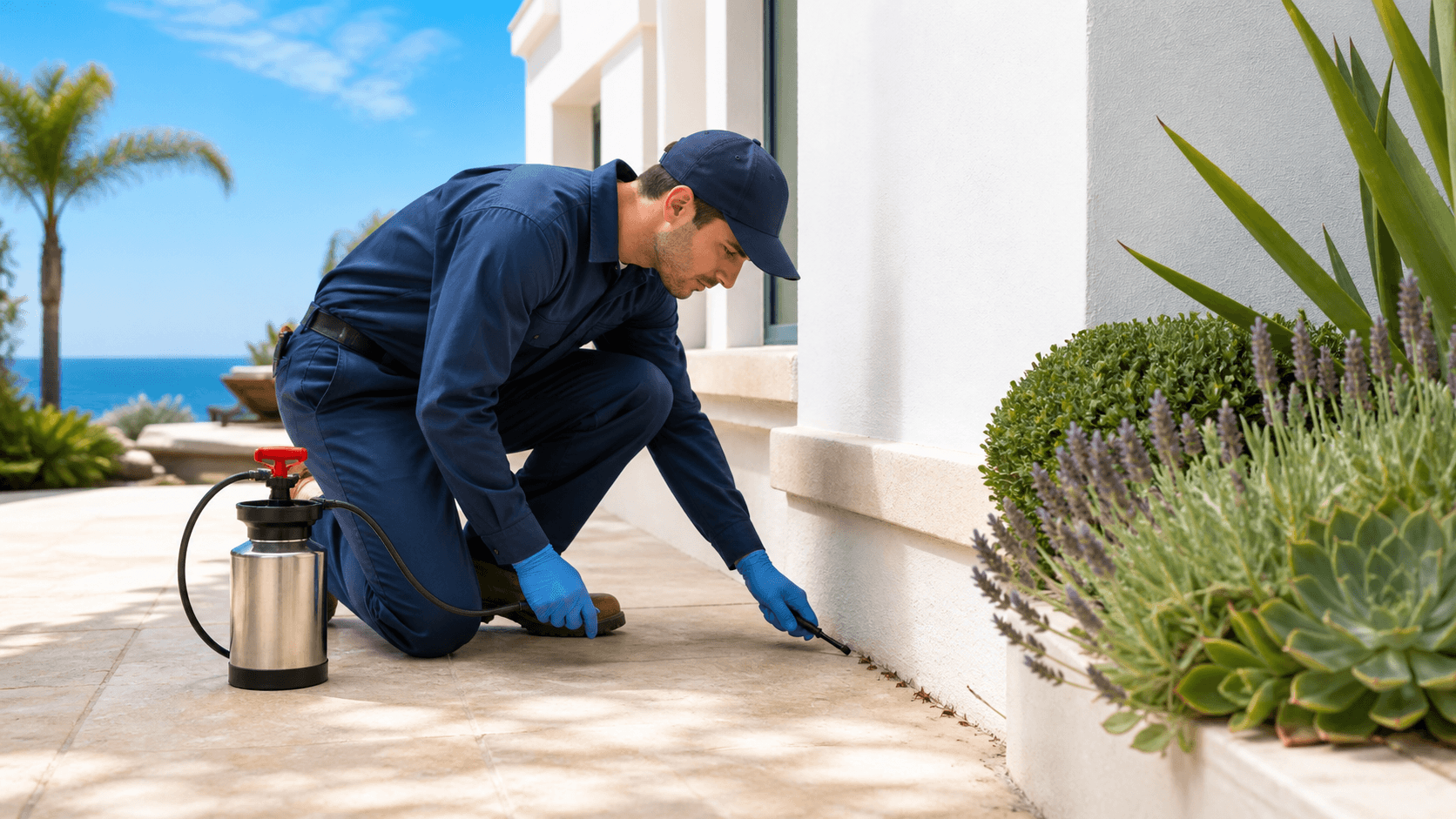
When we perform ant infestation treatment for coastal homes, we start with a detailed inspection. We identify the ant species, find trails, entry points, and moisture problems, then choose products and methods that are safe for kids and pets. Coastal structures like stucco homes, slab foundations, and raised decks each need slightly different strategies.
Ongoing seasonal service plans can also help in Orange County. Instead of waiting for ants to invade, regular service keeps an exterior barrier in place, monitors colony activity, and adjusts treatments as daylight hours, moisture, and ant patterns shift. This preventive approach often keeps ants outside where they belong.
Build Your Fall Ant Defense Plan Today
Fall is a great time to get ahead of ant problems before holiday cooking, guests, and school breaks make life busier. A simple seasonal plan can keep your home protected.
Use this quick checklist:
- Seal and repair: Caulk small gaps, replace worn weatherstripping, and fix leaks.
- Clean and declutter: Wipe counters, store food in sealed containers, and clear garage clutter.
- Treat and monitor: Use safe bait stations where you see early activity and check them regularly.
- Plan ahead: Arrange a fall inspection before heavier rains or moisture changes push more ants inside.
Coastal homeowners and renters can get long-lasting, low-toxicity protection by combining smart DIY habits with professional support when needed. With a little attention now, you can enjoy your coastal home without sharing it with ant trails across the counter.
Protect Your Home With Targeted Ant Solutions Today
If you are spotting trails of ants in your kitchen, bathroom, or around your foundation, now is the time to act before the problem spreads. At Recon Pest Control - SEO, we provide customized ant infestation treatment designed to identify the source and stop ants at the colony. Our technicians use proven methods that are safe for your family and effective against stubborn infestations. Ready to schedule service or ask a question about your situation? Simply contact us and we will help you take back your home.