Protect Your San Clemente Home From Attic Rodents
Rodent-proofing in San Clemente starts long before you ever see a rat on the fence. Most homeowners first notice small signs, like scratching in the ceiling at night, droppings in the attic, or a strange smell they cannot quite place. Others see rodents running along rooflines, power lines, or backyard walls and wonder if they are already inside.
Our coastal town has its own set of rodent challenges. The warm air, older rooflines, Spanish tile roofs, canyon-adjacent homes, and tight neighborhoods give rodents easy paths from tree to fence to roof to attic. In this guide, we will walk through how to spot rodent activity, what simple checks you can try on your own, when it is time to bring in a professional team, and how long-term proofing helps protect your kids, pets, and insulation from ongoing damage.
Why Rodents Love San Clemente Attics and Rooflines
Rodents like roof rats and house mice are very comfortable living alongside people, and they are especially drawn to our area. Roof rats are skilled climbers that prefer to live up high. They use palm trees, fruit trees, and thick coastal plants as overhead highways that lead straight to your roof.
San Clemente's mild temperatures and long daylight hours help rodents stay active all year. Attics give them a dry, quiet, and hidden space to nest, raise young, and stash food. Late summer and fall can be a busy time, since nights are a little cooler and rodents start looking for safe, steady shelter they can use for months.
Many Orange County homes also share building features that rodents like:
- Spanish or concrete tile roofs that leave gaps at the edges
- Overlapping rooflines where additions meet the main house
- Deep eaves that create shaded, protected ledges
- Roof and attic vents with screens that are damaged or missing
Those small details may not look like much, but to a nimble roof rat, a gap the size of a quarter can be a front door.
Warning Signs of Rodents in Attics and Rooflines
Rodents usually make themselves known if you know what to look for and listen for. Inside, you may hear scratching, scurrying, or light thumping noises at night, and sometimes gnawing sounds in walls or ceilings. Visual clues can include small, dark droppings on attic floors or stored items, greasy rub marks along beams, pipes, or rafters, and shredded insulation, paper, or fabric used as nesting material.
You might also see chew marks on plastic bins, cardboard boxes, or stored holiday decor. Any chewed wires are a serious warning sign that should never be ignored.
Around your roofline and outside, keep an eye out for nesting material tucked under roof tiles or in gutters, droppings on patio covers, ledges, or along the top of fences, and chewed or damaged fascia boards and eave gaps. You may also notice gnawed areas around utility lines where they enter the house, or repeated activity around roof vents, gable ends, or attic louvers.
For a simple DIY check, use a bright flashlight and carefully peek into the attic. Focus first near:
- The attic hatch or ladder opening
- Areas where daylight shines in from vents or gaps
- Spaces around pipes, wiring, or the chimney
Take photos of anything that looks suspicious, like clusters of droppings or shredded insulation. Strong, sour, or ammonia-like odors, thick droppings, or large nesting areas usually point to a long-term infestation that needs more than a quick fix.
DIY Rodent-proofing Basics for San Clemente Homes
Safety comes first with any rodent work. Rodent droppings and nesting material can carry germs, so always protect yourself. Basic safety steps include:
- Wear disposable gloves and a mask when near droppings
- Avoid stirring up dust by sweeping or shaking insulation
- Turn off power to areas where you will be near exposed wiring
- Never handle live or dead rodents without protection
For simple gaps and small openings you can reach from the ground or a short ladder, some homeowners tackle light sealing on their own. Common materials include:
- Steel wool pushed into tiny gaps, then sealed with caulk
- Hardware cloth over attic vents or open gaps
- Weatherstripping along the bottom of doors or attic access points
It is important to know your limits, though. DIY work might be fine for obvious gaps at ground level or along doors, simple trimming of low branches resting on the roof, and securing trash, bird seed, and pet food in sealed containers. More complex or risky tasks should be left to pros, such as working on steep or high rooflines, handling heavy or long-term infestations, or dealing with damaged wiring, ducts, or deep attic cleanup.
Targeting Entry Points Along Rooflines and Eaves
On many San Clemente homes, the main rodent doorways are up high, along rooflines and eaves. Common entry points include:
- Gaps under Spanish and concrete tiles at the roof edges
- Unprotected or poorly screened roof vents
- Openings around plumbing and HVAC pipes or lines
- Loose or broken eave and soffit boards
- Gaps where the main roof meets a patio cover or room addition
If you are comfortable with a ladder and use it safely, you can do some light checking from the ground or from a low height. Look for daylight visible between eave boards or around vents, gnaw marks on plastic vent covers or soft wood, droppings on gutters, ledges, or the top of patio covers, and loose tiles or areas where birds and rodents could crawl under.
Professional rodent control teams often use construction-grade solutions designed to last in coastal sun and salty air, such as:
- Custom metal flashing to close gaps under roof tiles
- Rodent-resistant covers on roof and attic vents
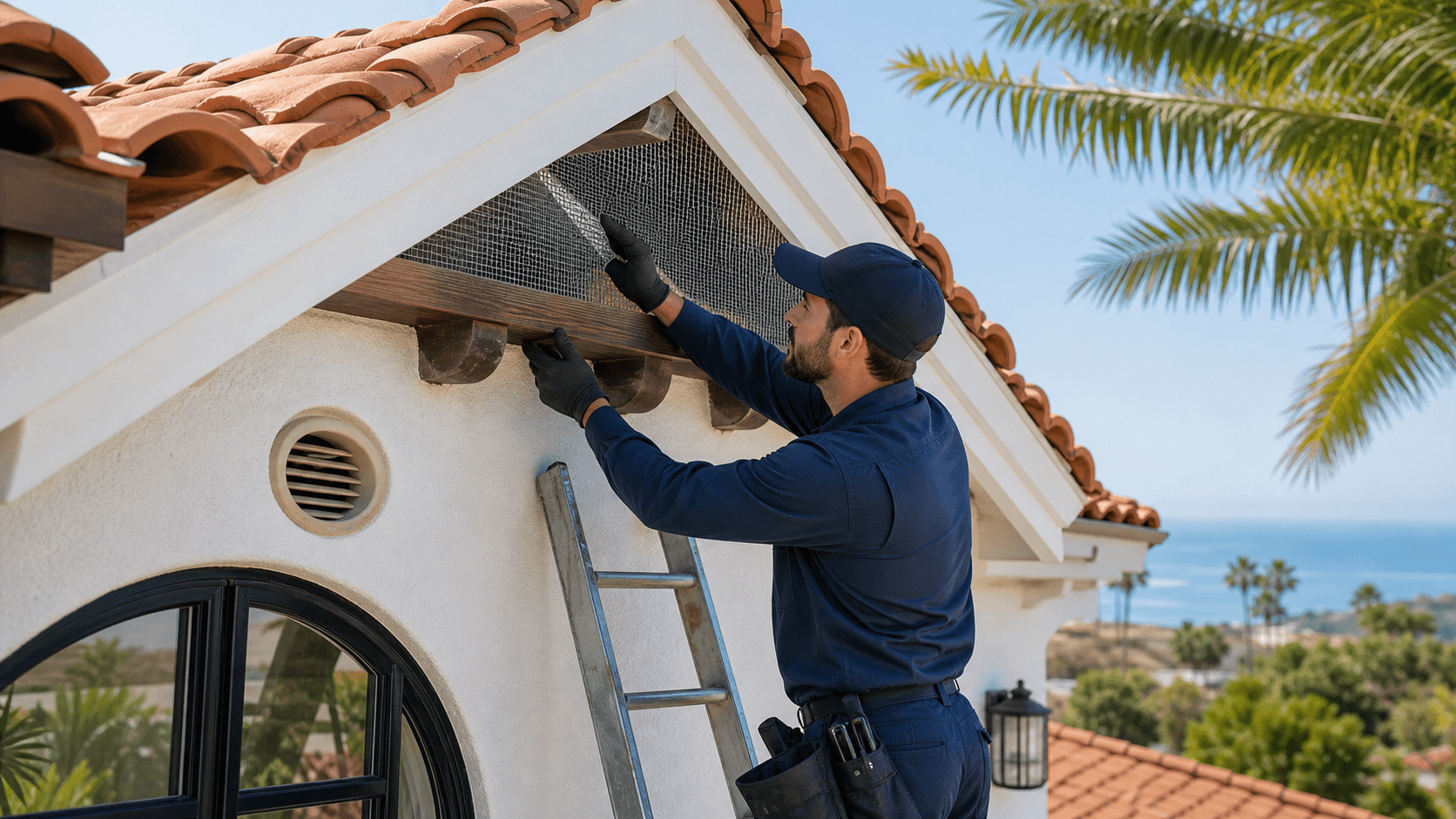
- Hardware cloth securely installed over gable vents
- High-quality sealants that stay flexible in heat and sun
These methods aim to block current entry points and also prevent new ones from opening up too quickly.
Seasonal Strategies and When to Call a Professional
Early fall is a smart time to think about rodent-proofing in San Clemente. Kids are back in school, holiday storage bins start coming out of the attic, and rodents are looking for stable nesting spots before the busy season around your home begins.
A simple year-round plan can help keep your home ahead of rodent pressure:
- Summer: Trim trees and shrubs away from the roof, clean up yard clutter
- Early fall: Check the attic and roofline for new gaps, droppings, or sounds
- Winter: Listen for fresh activity and watch for new droppings or rub marks
- Spring: Repair any storm-related damage to soffits, flashing, or vents
Because we live near the coast, it also helps to:
- Keep palm fronds and dense branches thinned and away from the roof
- Manage fruit trees so fallen fruit is not left on the ground
- Store firewood and outdoor gear up off the soil
- Check clips, soffits, and roof edges after high winds for new openings
Some rodent problems are too big or risky to handle alone. It is time for a professional when you notice ongoing scratching or gnawing even after you seal easy gaps, strong, persistent odors that suggest a long-term nest or a dead rodent, or any sign of chewed electrical wiring or damaged AC and HVAC lines. You should also bring in help if you find large areas of disturbed or contaminated insulation, or evidence rodents have been in kids' rooms, play areas, or pet spaces.
A professional exclusion approach focuses on the whole structure, from foundation to roofline. That means tracking hidden routes, using durable materials, and pairing trapping, cleanup, and sealing so you get both short-term relief and long-term protection.
As a local San Clemente company, we understand the roof styles, attic layouts, and neighborhood patterns common across Orange County. Our goal with rodent-proofing is simple: shut down the rodent highways, protect your family and pets with careful product choices, and keep your attic and roofline quiet and clean for the long run.
Protect Your Home With Lasting Rodent Prevention
If you are ready to stop rodents from getting into your property for good, our team at Recon Pest Control is here to help with professional rodent proofing in San Clemente. We focus on long-term solutions that seal entry points, reduce attractants, and keep your home or business protected season after season. Reach out today and we will walk you through your options, answer your questions, and schedule a convenient service time. For quick assistance or to request an appointment, simply contact us.