Protect Your Doorway Before a Small Nest Becomes a Risk
Wasps circling a front door, patio entrance, garage, or side gate can make a normal trip outside feel stressful. A nest near an entryway puts children, pets, visitors, delivery drivers, and anyone with a sting allergy too close to active insects. We recommend treating doorway activity seriously before a small nest turns into a larger problem.
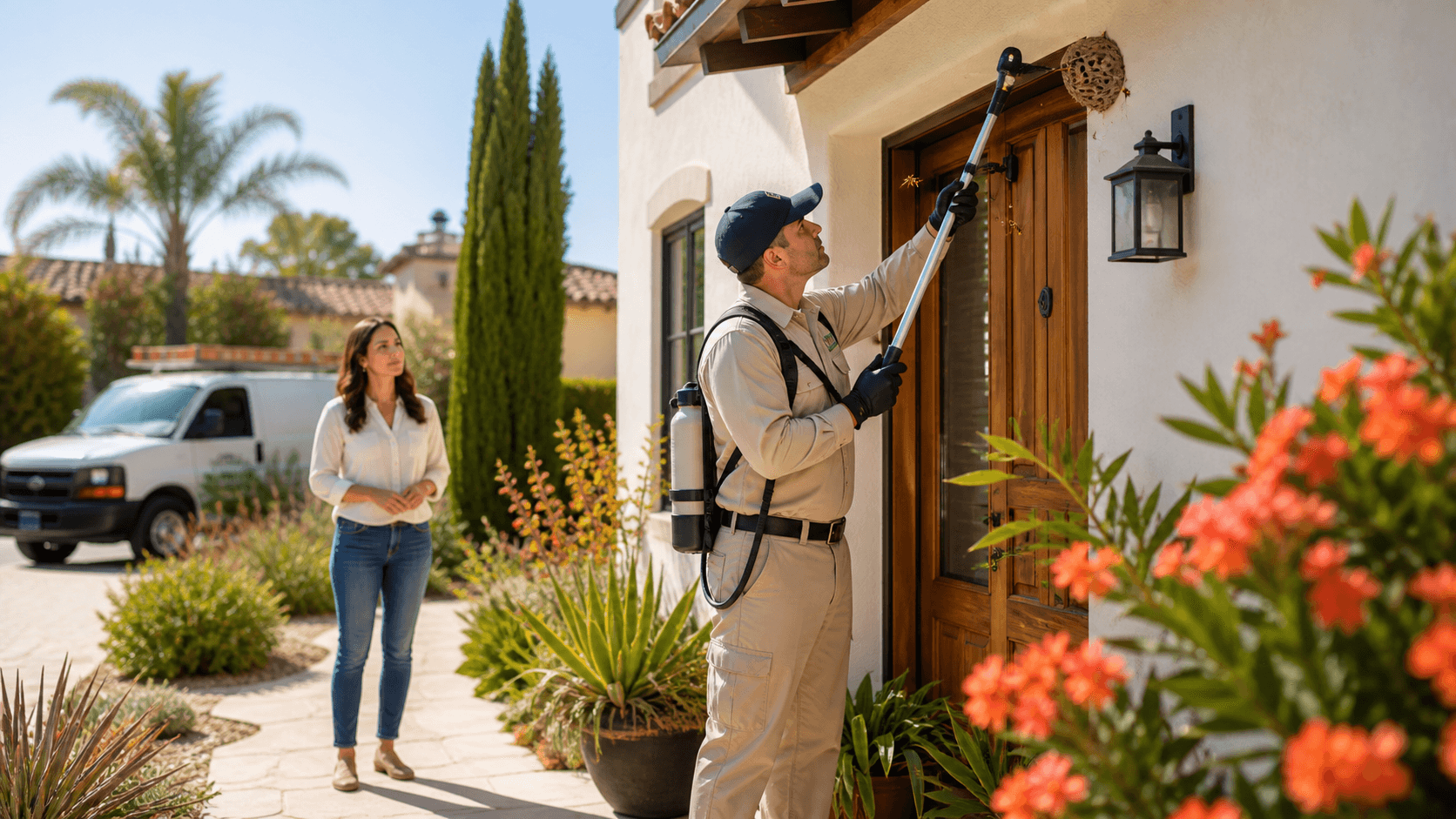
Protected spots around a door are popular nesting areas. We often find nests under eaves, porch ceilings, light fixtures, mailbox posts, shutters, and gaps around exterior trim. Even when the nest you can see looks small, steady wasp traffic may mean the colony is becoming established nearby.
During November, it can be tempting to assume wasps have stopped being active. Orange County's mild climate and sheltered exterior spaces can keep activity going, especially during sunny parts of the day. A late-fall nest should never be treated as inactive simply because the calendar has moved into the holiday season.
Why Wasps Choose Orange County Doorways
Doorways offer more than a convenient place to land. Covered porches, rooflines, and eaves provide shade and protection from direct sun, wind, and rain. Paper wasps in particular may build their open, paper-like nests beneath protected surfaces where they are less likely to be disturbed.
Food and moisture can also keep wasps close to homes and businesses. If a nest is near an entrance, we look at what may be attracting activity around that area, including:
- Open trash bins or recycling containers
- Pet food left outdoors
- Fallen fruit, sticky drink spills, or outdoor dining leftovers
- Dripping hoses, leaky outdoor fixtures, or standing water
- Patio furniture and decorations that have been left undisturbed
Cooler evenings can mean fewer visible wasps, but warmer daytime conditions may still bring them back out. Holiday decorations, stored patio items, and less frequent outdoor cleaning can create quiet places for wasps to build. Before hanging lights or moving a wreath, umbrella, or patio chair, it is wise to look over the item from a safe distance.
Spot Nest Warning Signs From a Safe Distance
Repeated wasp traffic is one of the clearest signs that something is happening near your door. You may notice insects traveling to the same corner of an eave, disappearing behind trim, or moving through a small gap near siding. A gray, paper-like structure under an overhang is another common clue.
Not every nest is exposed. Paper wasps often build visible, umbrella-shaped nests under porch ceilings, eaves, and light fixtures. Yellowjackets may use hidden spaces, such as wall voids, ground openings, or cavities around the structure. Buzzing behind a wall or wasps entering a crack near a doorway may point to a concealed nest.
Please do not move closer to confirm what you are seeing. Getting near a nest can disturb the colony, especially if it is hidden or attached to the structure. We recommend watching from a distance and noting what you observe:
- Where the wasps are flying in and out
- Whether activity rises at certain times of day
- Whether the insects are near a door, light, wall, or ground opening
- Whether the nest appears exposed or hidden
- Whether wasps are showing up indoors
Bees and wasps can look similar from far away, but they may call for different responses. Bees are important pollinators, so if you are unsure what type of insect is present, a licensed pest professional can assess the situation without putting you in a closer position.
Take Safe First Steps Around an Active Nest
The safest immediate move is to create space. If possible, use another entrance until the area can be assessed. Keep children and pets away from the doorway, let household members or employees know about the issue, and consider placing a visible reminder near the entrance for guests or delivery drivers.
Sudden movement near the nest can make the situation worse. Avoid slamming doors, swatting at flying wasps, knocking down the nest, or spraying it with water. We also advise against using fire, harsh chemicals, or improvised tools. Those actions can agitate the colony and may cause wasps to search for another exit, including a route into the home or business.
Sealing an opening while wasps are actively using it can create another problem. If insects are entering a wall void through a gap near trim or siding, blocking that gap too soon may push them farther into the structure. Instead, document the location from a safe distance. Notes about the nest size, wasp traffic, and possible wall entry points can help us plan safer wasp removal in Orange County.
Professional help is especially important when a nest is near a frequently used door, attached to the building, inside a wall or attic, above a play area, or difficult to reach without a ladder. Prompt attention also matters if someone has a known sting allergy, the wasps seem aggressive, the nest is growing quickly, or the only usable entrance is affected.
When you work with us, Recon Pest Control approaches the issue with a targeted inspection of the insect activity and nesting location. As a locally owned, licensed, and insured company, we provide family- and pet-conscious treatment options while helping you understand what may be attracting wasps to the area.
Make Your Front Door Feel Safe Again
Once active wasps are no longer using an opening, prevention can help make the entryway less inviting. We recommend checking door frames, exterior trim, siding, soffits, utility lines, vents, and nearby gaps for damage. Loose screens, worn weatherstripping, and cracked caulking can create sheltered spaces around doors and windows.
Small habits outdoors can matter, too. Keep trash lids closed, rinse recycling containers, clean drink spills after gatherings, bring pet food inside, and remove fallen fruit. Before using holiday decorations or rearranging patio furniture, inspect those items carefully from the ground or at a safe distance.
Regular exterior checks are a simple way to catch activity early. Look over porch ceilings, eaves, garage corners, light fixtures, and covered entryways during warm weather and before guests arrive for holiday gatherings. If you see repeated wasp traffic, a hidden opening, or a nest near people and pets, keep your distance and avoid trying to force the problem away.
Protect Your Entryways With Professional Help
Recon Pest Control can assess nest activity near doors and recommend a safe, targeted solution for your property. Our wasp removal in Orange County service helps address active nests without putting your household at unnecessary risk. For help scheduling an inspection, contact us to discuss what you have noticed around your entryways.